Physical Address
304 North Cardinal St.
Dorchester Center, MA 02124
Physical Address
304 North Cardinal St.
Dorchester Center, MA 02124

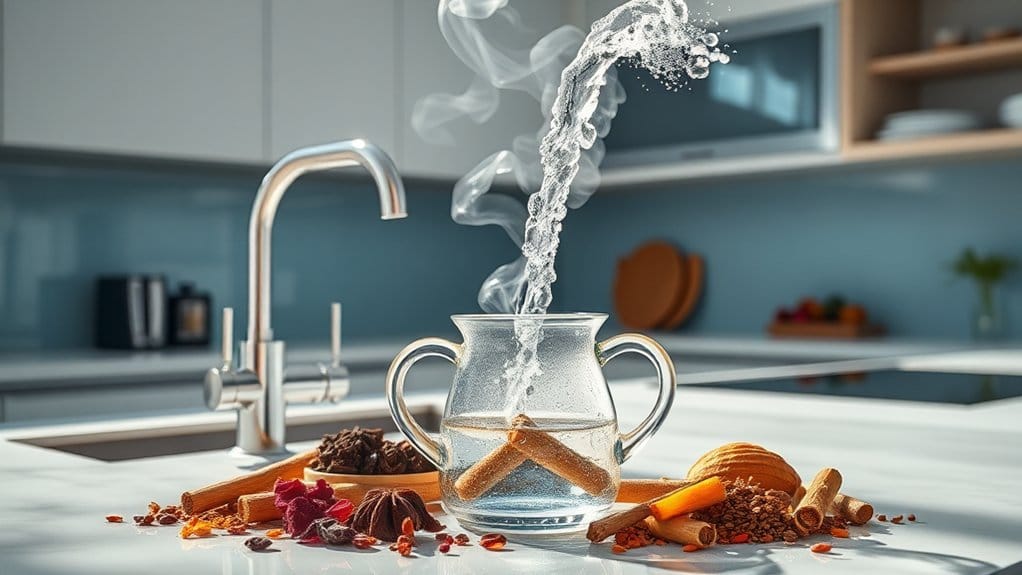
You can easily turn your tap water into specialty brewing magic in no time! By using Third Wave Water mineral packets, you can transform ordinary water into a flavorful base. Just mix the packet with distilled or RO water, and voilà! Your brew is ready to shine. Imagine enjoying a crisp, invigorating beer with each sip, thanks to a few simple adjustments. Want to learn how to tweak your water for even better results? Keep investigating!
When you think about brewing beer, you might picture hops, malt, and yeasty goodness, but have you ever considered the water? Water makes up about 95% of your beer, shaping its flavor in more ways than you’d guess. Water quality is crucial because the mineral composition affects everything from fermentation to the final taste. The mineral content of the water can either enhance the beer’s complexity or detract from its desired profile.
You wouldn’t drink contaminated water, right? So, why let it ruin your brew? Clean, filtered water guarantees your beer tastes the way you want it every time.
Just imagine a crisp lager or a rich stout; they owe part of their charm to this apparently simple ingredient.
Different places have unique water profiles, giving traditional beers their character.
You might think the magic of brewing comes solely from hops and malt, but minerals play a starring role, too! Calcium and magnesium are the rock stars here. They help yeast flocculate and ferment properly, adding clarity to your brew. Think of them as your brewing buddies, keeping everything balanced.
In addition, the mineral composition of your water directly impacts the flavor during fermentation. High calcium levels are crucial for yeast flocculation and pH control, which further enhances beer clarity and stability. Chloride amplifies that rich, malty sweetness, whereas sulfate kicks up hop bitterness, creating a performance between flavors. It’s all about balance; too much of either can leave your beer tasting off.
Sodium? It’s there to boost sweetness without being salty, just like a friendly pat on the back.
Just imagine brewing your favorite coffee, only to find that the water you use can make or break the flavor.
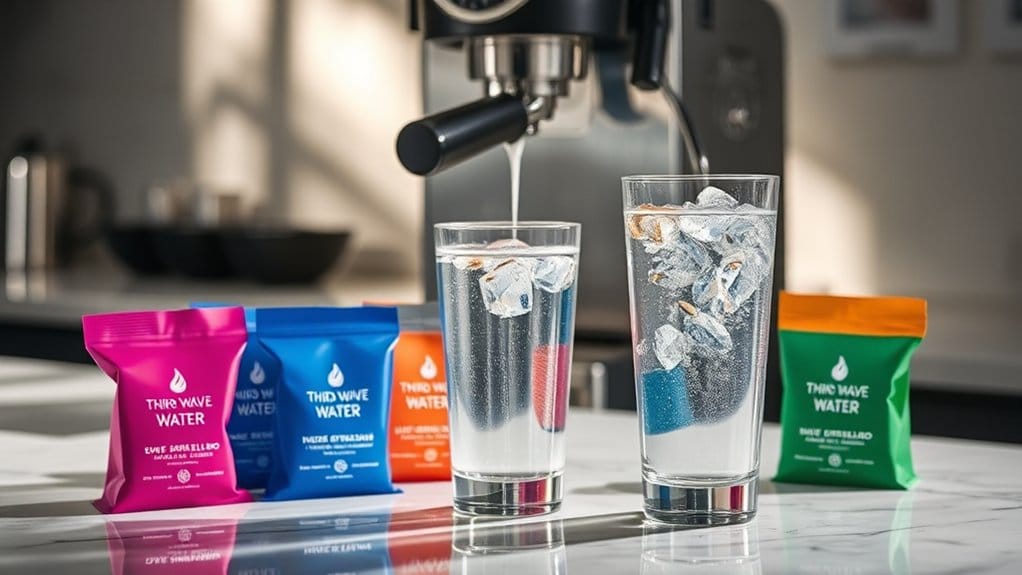
With Third Wave Water, you can improve your tap water into something special. Their mineral packets are crafted to meet the Specialty Coffee Association guidelines, ensuring a perfect balance for all brewing methods. Water quality is crucial since it comprises approximately 90% of an espresso shot and directly influences the flavor and aroma. Freshly ground beans also benefit from using quality water, enhancing the overall brewing experience.
You won’t need to overthink it! Just mix the packet with distilled or RO water, and voilà—instant specialty brewing water.
It’s easy to use and travels well, so you can enjoy great coffee anywhere. Plus, you’ll protect your espresso machine from annoying scale.
Bid farewell to boring tap water and hello to rich, delicious brews that truly express the beans’ potential!
pH levels in brewing can feel like a secret ingredient that’s often overlooked. You might be surprised to learn that your brewing water’s pH greatly impacts flavor and fermentation.
The magic happens when your mash pH is between 5.2 and 5.6. This is where starch turns into sugars, fueling delicious brews. If you go below 4.0, though, you risk spoilage, like inviting an unwanted guest to your party!
Yeast loves slightly acidic environments, thriving best under 5.0. So, when you measure pH, bass through your favorite tunes; it’s a performance between science and flavor.
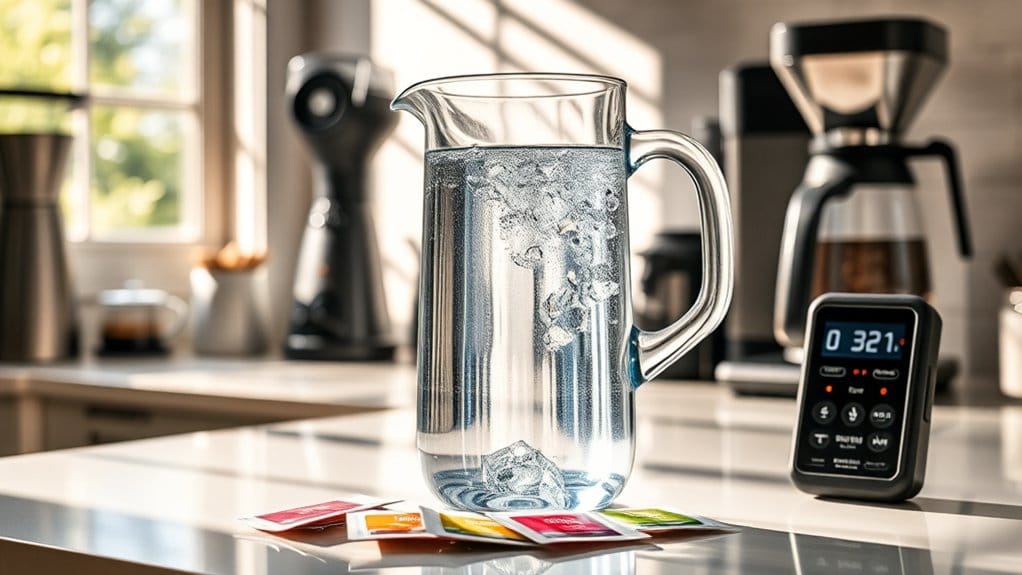
When preparing for a brewing session, it’s crucial to keep in mind that the quality of your tap water can make or break your beer.
If your tap water’s got too many minerals, it’s time to dial it down. A simple 1:1 dilution with distilled water can help cut those bothersome bicarbonate levels. It’s like giving your water a soft hug!
Once you’ve toned it down, consider adding some salts like gypsum or calcium chloride for that perfect balance.
Don’t fret if you over-dilute, just toss in some nutrient blends to replace lost minerals.
As you plunge into the world of specialty beers, you might find that understanding mineral profiles can feel like unlocking a secret treasure chest. Each mineral plays a unique role in shaping flavors.
For instance, calcium boosts yeast health and improves beer clarity. Magnesium adds a dash of yeast nutrients, whereas sulfate sharpens hop bitterness, perfect for that IPA.
On the flip side, chloride sweetens malt and thickens mouthfeel—ideal for rich stouts. Ever noticed that pilsners favor softer water? That’s to let delicate flavors shine.
Each beer style demands its own mineral mix, making you a creative wizard in your brewing kitchen. So, get ready to experiment! Who knew water could be your secret ingredient for brewing magic?
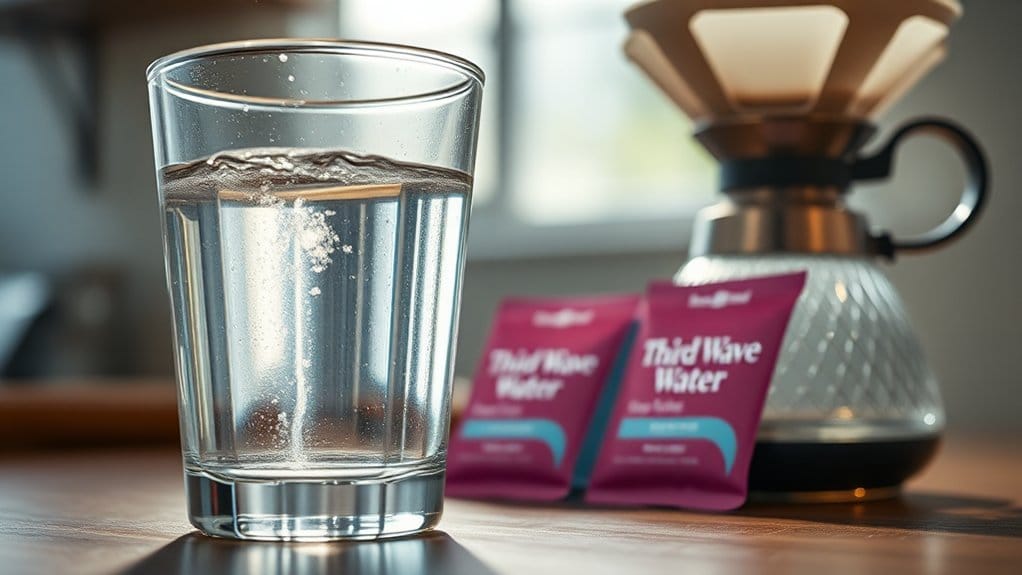
Unlocking the secrets of specialty brewing doesn’t stop with mineral profiles; you can improve your brewing game with Third Wave Water packets.
These magical little packets turn distilled or RO water into brewing perfection. Each packet offers a precise mix of minerals—either the Espresso or Classic profile—making it easy for anyone to whip up barista-level drinks.
Simply grab a packet, add it to a gallon of zero-mineral water, shake it like a maraca, and voilà! Your brewing water’s ready. No more worrying about yucky tap water! Additionally, using water with the right mineral content enhances the extraction process, improving overall flavor and aroma, crucial factors for optimal brewing results.
These packets even cut down on scaling, giving your coffee machine a longer life. So why not brew like a pro? Your taste buds will thank you, and your coffee-loving friends will be impressed!
To brew the best beer, timing your additions is crucial. Think of it like a perfectly timed performance.
First, add salts like gypsum or calcium chloride early on to adjust your water’s mineral content. This helps with enzyme activity during mashing. You want that mash efficiency to shine!
Don’t forget the acids; adding them before mashing sets your pH between 5.2 and 5.6, which boosts flavor.
Finally, when you sparge, heat that water just right to maintain the mash temperature. You wouldn’t want to shock your grains, right?
Getting your timing right isn’t the only part of brewing that can make or break your batch; tracking your brewing water adjustments plays a huge role too.
Think of your water like a secret ingredient. You need to track its profile meticulously. Record any salts or acids you add, along with quantities and reasons. Municipal water changes can be sneaky, so note those seasonal shifts!
Use brewing software, like BrewFather, to keep everything organized. Regularly check your mash pH and hardness, too. Consider this your brewing diary.
When you experiment with different water profiles, you’re diving into an exciting domain of flavor possibilities. You can create beers that are crisp, malty, or balanced, simply by tweaking your water.
Did you know that water from Burton-on-Trent highlights hop bitterness? It’s like magic for IPAs! Or, if you prefer a smooth stout, try Dublin’s creamy profile with high bicarbonate.
Don’t worry about being a mad scientist; even small changes can lead to big improvements. Use a testing kit, or start with distilled water and add salts.
Just remember, every brew is an expedition. Have fun, taste the differences, and find what works best for you. What’s better than crafting the perfect beer that speaks to your taste buds? Cheers!
Yes, you can use bottled spring water for brewing, but be cautious. Its mineral content can vary, potentially impacting flavor and consistency. Always test and adjust the water to suit your brewing needs effectively.
To test your tap water’s mineral content, use a water hardness test kit or DIY test strips. They’ll provide quick, easy results, helping you understand your water’s composition without needing expensive lab equipment or expertise.
Yes, there’s a difference between distilled and RO water. Distilled water is highly purified through boiling, whereas RO water filters out contaminants but may retain some minerals, impacting taste and health benefits. Choose based on your needs.
To make effective water adjustments, you’ll need pH meters for measurement, pH buffer solutions for calibration, carbon filters for impurity removal, and brewing salts like gypsum and calcium chloride to modify water chemistry.
You should typically add 1–3 mL of 88% lactic acid per 5-gallon batch. Measure your mash pH and adjust accordingly, ensuring you stay below 5 mL to prevent unwanted sour flavors.