Physical Address
304 North Cardinal St.
Dorchester Center, MA 02124
Physical Address
304 North Cardinal St.
Dorchester Center, MA 02124

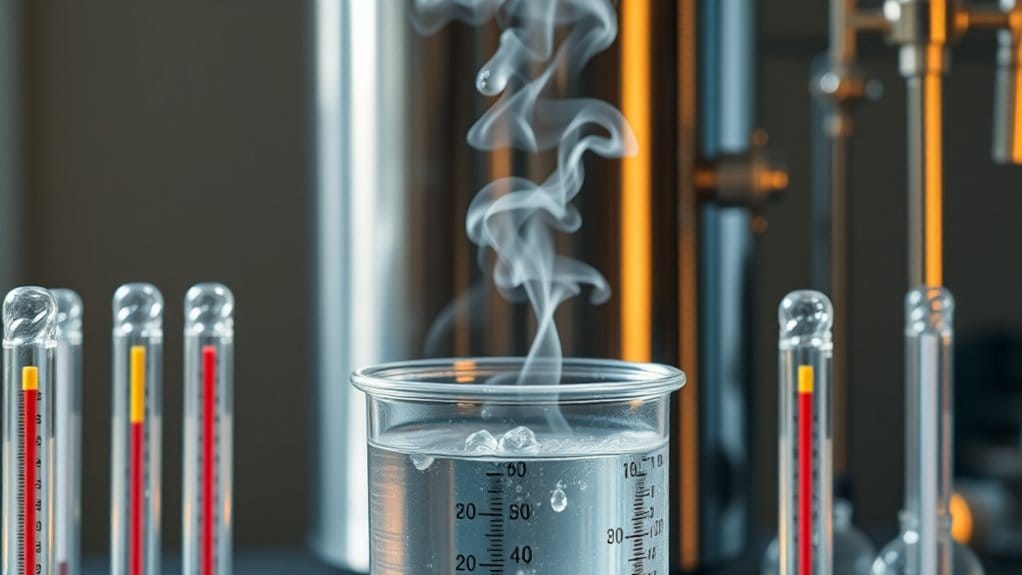
To keep water temperature stable during extraction, advanced tech like PID controllers helps adjust in real-time, ensuring precision. Quality insulation materials trap heat, as heated elements respond quickly to changes. Think of it like holding a warm cup of cocoa—nothing beats that cozy feeling! Plus, using the right brewing equipment makes all the difference. Curious how different materials impact your favorite drink? Stick around to investigate more about the science behind your perfect brew!
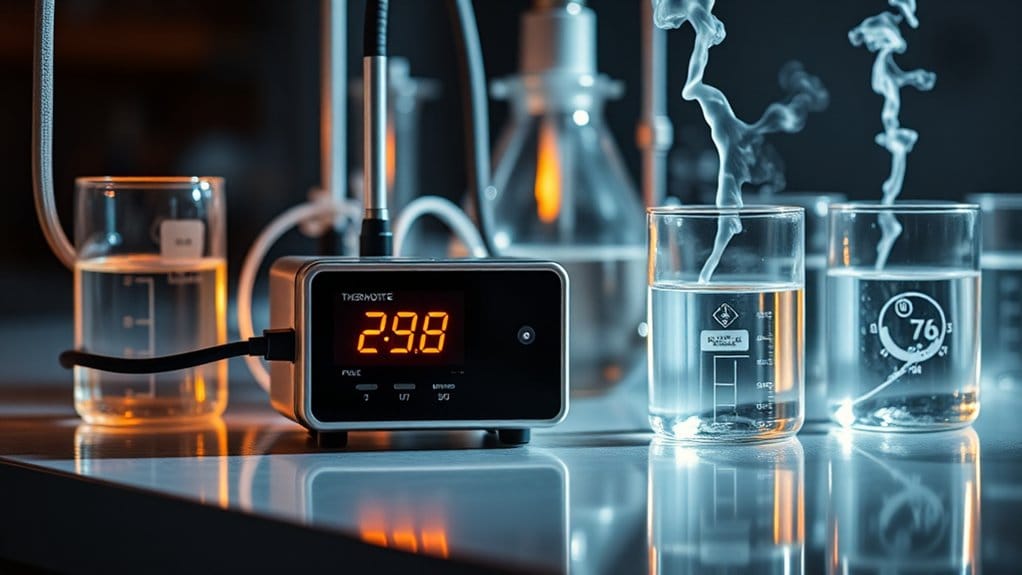
In the matter of keeping temperatures stable during extraction, thermostats and PID controllers play crucial roles. Imagine brewing the perfect cup of coffee; you need precise temperatures!
Traditional thermostats turn heating on or off, but they can cause fluctuations, leaving you guessing. Conversely, PID controllers always aim for perfection! They respond to temperature changes faster and more accurately, often keeping temperatures within a tight range of +/- 0.3°C. This is made possible because PID controllers enhance control technology, adjusting for errors to maintain consistency in the brewing process.
Think of PID controllers as your personal temperature assistants, adjusting in real time to guarantee a consistent brew. Although they may be pricier and a tad more complicated, their reliability makes all the difference. Additionally, it’s important to remember that various factors influence extraction temperature beyond just PID control, which can affect the overall flavor of your brew.
Though you mightn’t think about it, insulation plays a key role in keeping your extraction water at just the right temperature. It acts like a cozy blanket, slowing heat loss and keeping your water warm longer. Think about those chilly winter nights—without proper insulation, you’d lose heat fast. Insulation traps air or other low-conductivity materials, reducing both conductive and convective heat loss. Additionally, the benefits of insulation extraction mean that you can ensure your home maintains its temperature efficiency during the extraction process. If your tank’s fully covered, it avoids those bothersome cold spots too! Increased insulation thickness means better heat retention—like piling on extra layers when it’s frosty outside! Furthermore, using double skinned, pre-insulated tanks can greatly enhance the efficiency of heat retention during the extraction process. Nevertheless, gaps or thin spots can cause temperature swings, which funnily enough, isn’t the goal. Proper insulation sets the stage for a perfectly balanced extraction process!

When you think about materials that improve thermal conductivity, metals often come to mind first. Copper and aluminum, for example, get heat moving fast with their impressive conductivity.
Imagine this: copper conducts heat at about 400 watts per meter Kelvin! This efficiency in heat transfer is crucial because the thermal conductivity of a medium influences how effectively heat can be dissipated in various contexts.
Next, you’ve got carbon-based materials like graphite, which kick it up a notch with decent conductivity too. Although natural materials like wood have much lower conductivity, they still play a role in specific contexts.
Engineers often mix materials, creating composites that balance conduction and insulation. It’s like a cooking recipe where you combine flavors for the best dish!
Active heating elements play a crucial role in keeping water temperatures stable during extraction, and you’ll appreciate their efficiency once you see them in action. When these elements convert electrical energy into heat, they create a direct connection with the water, allowing for rapid temperature changes.
It’s like a warm hug for your brew! Stainless steel elements not only last longer but additionally keep everything clean—perfect for those who cherish their drinks. Plus, low watt density means less scale buildup, which is a win for performance over time. Maintaining an optimal water temperature during brewing significantly enhances the flavor profile of your coffee.
With industrial heaters pumping up to 2000 kilowatts of power, you’ll have precise control for those perfect sips. Who doesn’t love a perfectly brewed cup of coffee that stays just right?
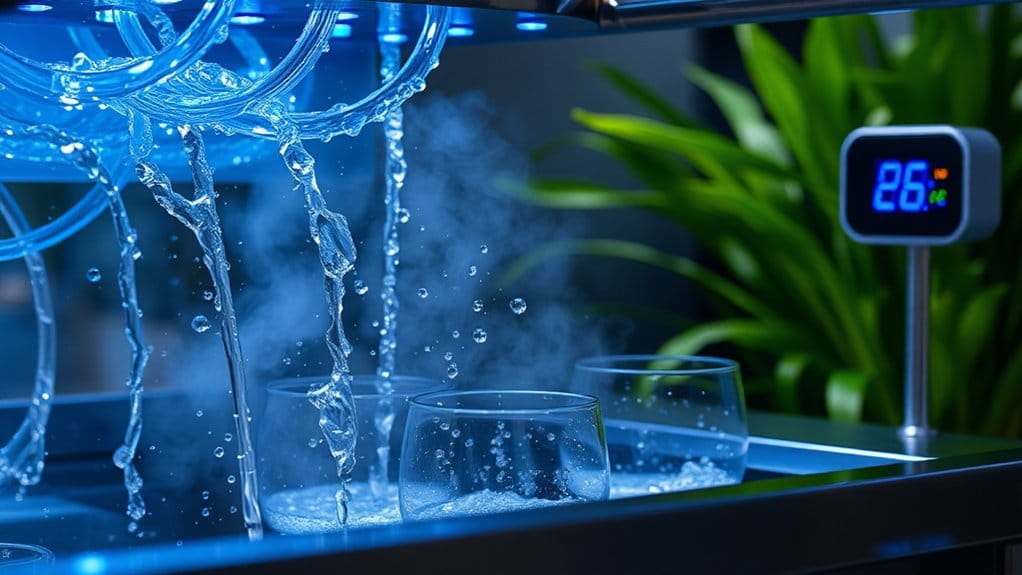
To keep your water at the perfect temperature during extraction, recirculation techniques are vital.
Think of gravity-fed systems, which work like magic! By placing hot water pipes higher than cold ones, they create a natural flow without pumps. This means less energy use and more savings for you.
Then there are demand-controlled systems. They’re like your personal temperature detectives, activating only when needed.
Also, using automated control helps maintain that sweet spot of around 120°F, ensuring you always have hot water ready.
Plus, with mixing valves, you can avoid nasty surprises like scalding.
With these clever systems, you’ll enjoy efficient, safe, and consistent water—perfect for making your favorite brews! Who knew temperature control could be this fun?
As you plunge into the world of water temperature stability, keep in mind that various environmental factors play a big role in how consistently temperatures hold up.
Imagine if those tall trees along riverbanks suddenly vanished. You’d see more sunshine hitting the water, raising temperatures faster than a popsicle on a summer sidewalk! Plus, without plants to provide shade or cool through evapotranspiration, the water just can’t catch a break.
But it’s not just about vegetation. Dams can disrupt the natural flow and temperature cycles, making things unpredictable downstream.
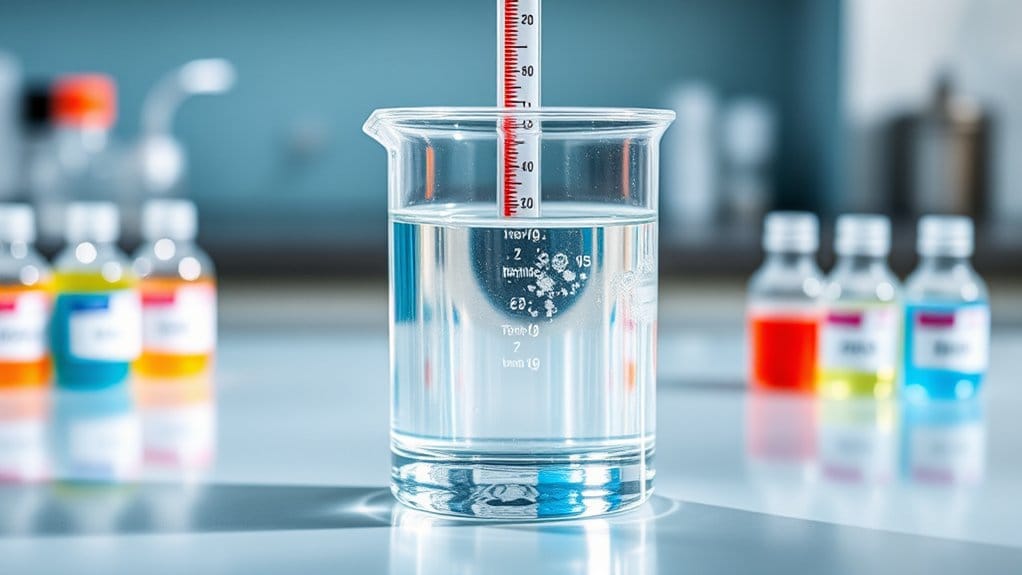
When you think about brewing your favorite coffee or tea, have you ever considered how water quality plays a crucial role in that perfect cup?
It’s true—mineral content matters! Hard water, rich in calcium and magnesium, helps keep your temperature steady, whereas soft water leaves you vulnerable to fluctuations. You want just the right balance; too many minerals can lead to scale buildup in your espresso machine.
Plus, the pH level can change how flavors come out. Neutral-to-slightly acidic water is best for avoiding a bitter surprise in your brew. Additionally, the presence of powerful antioxidants in coffee can be influenced by the water used during extraction, further enhancing the flavor profile.
Though you might think brewing coffee or tea is all about the ingredients, temperature control is just as significant. To get it right, you’ll need proper monitoring tools. Temperature Control Units (TCUs) circulate water, ensuring your extraction stays steady.
With sensors measuring real-time temperatures, you can hit your sweet spot—like that perfect 92°C for espresso.
Ever heard of thermofilters? They offer precise readings, helping you dodge any unwanted temperature bumps.
And let’s not forget those fancy multi-boiler systems that let you control water separately from steam. It’s like having your cake and eating it too!
With real-time monitoring, you can focus on brewing rather than worrying if your coffee’s too hot or cold. Isn’t that delightful?
Brewing time affects water temperature stability as longer extraction increases heat loss. You’ll notice each additional minute can lower the temperature considerably, leading to inconsistent flavors if not managed properly. Be mindful of time!
Ambient humidity greatly impacts extraction temperature by influencing heat transfer and equipment efficiency. Higher humidity reduces evaporative cooling, modifies the water absorption in materials, and may require you to adjust your temperature management strategies.
Yes, the water you use can affect temperature fluctuations during extraction. Factors like chemical composition, pH levels, and dissolved solids influence thermal properties, which in turn impacts how stable temperatures remain throughout the process.
Altitude impacts water boiling points by lowering them, meaning you’ll need to adjust brewing techniques. At higher elevations, you might experience slower extraction and different flavor profiles, so experimentation is crucial for best results.
To reduce temperature drift over time, you should regularly calibrate heating elements and sensors, maintain your machine, use filtered water, and guarantee steady water pressure for consistent extraction performance. These measures help stabilize brewing temperatures effectively.