Physical Address
304 North Cardinal St.
Dorchester Center, MA 02124
Physical Address
304 North Cardinal St.
Dorchester Center, MA 02124


Green coffee wholesale prices can swing dramatically for a bunch of reasons. Unpredictable weather, like sudden frosts or droughts, messes with crop yields. Plus, market dynamics like supply and demand play a big role too. Global demand is on the rise, especially for specialty brews. And let’s not forget the impact of geopolitical tensions and trade issues, which can suddenly spike costs. Curious how these trends impact your morning cup? There’s more to reveal!
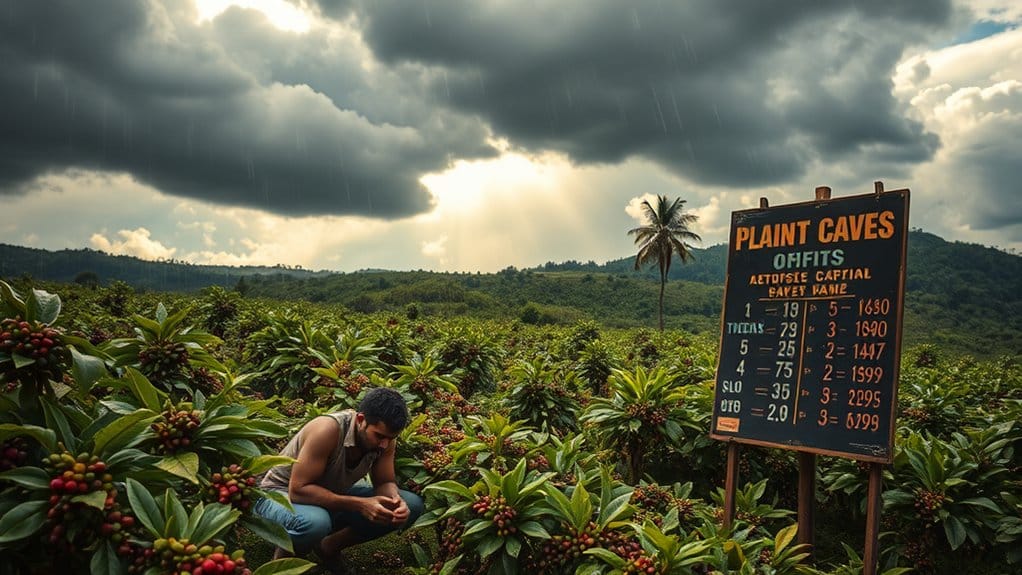
When you think about your morning cup of coffee, you mightn’t realize how much weather and climate impact its path from bean to brew. Imagine your favorite coffee farm. If it faces unpredictable rainfall, it could suffer droughts or drown in excess humidity. You can picture farmers struggling against fungal diseases, scrambling to protect their precious crops. A slight rise in temperature could spoil the beans, whereas heavy rains might invite pests. As climate change looms, smallholder farmers face reduced yields and quality, and that’s bad news for all of us coffee lovers. Additionally, the shrinking land area suitable for coffee cultivation threatens the future of coffee production as we know it.
Steering through the world of green coffee prices can feel like riding a rollercoaster, especially when you consider the role of futures trading. These contracts, like Coffee C Futures, represent 37,500 pounds per agreement and set global price benchmarks. Prices swing wildly based on what everyone anticipates for supply and demand, rather than just what’s happening right now. It’s like playing a game of guess who! If a drought threatens crops or geopolitical unrest pops up, speculation can drive prices higher or lower without warning. As noted recently, certified coffee stocks have seen a significant decline, contributing to the ongoing price fluctuations. Additionally, the Coffee C Futures contract is influenced by numerous factors, including weather and logistics, which further adds to the unpredictability of the market.
This constant shuffling messes with your planning. But hey, it gives coffee lovers another reason to indulge, right?
As coffee lovers, you might often find yourselves wondering how supply chain disruptions and production challenges can impact your favorite brew.
Imagine this: unexpected frosts in Brazil caused multiyear setbacks, as droughts reduced yields by 20% in Vietnam. This rollercoaster of weather makes it tough to guarantee steady supply. Additionally, severe weather events have been known to cause further delays and infrastructure damage, compounding the existing challenges.
Shipping hiccups, like port congestion, have led to delays in deliveries, testing even the most patient coffee drinkers. You might even remember the buzz about collapsing bridges and labor strikes causing chaos!
These challenges push roasters to look for alternative sources, reshaping trade flows and prices.
It’s not just supply chain woes causing ripples in the coffee world; growing global demand is changing the game too. You mightn’t realize it, but global coffee consumption is expected to hit over 175 million bags by 2025!
This boom is fueled by new markets in Asia and the Middle East loving their lattes. Specialty coffees are all the rage too—think artisanal roasts and unique flavors. People aren’t just drinking coffee; they’re hunting for quality and health benefits.
Health-conscious consumers are pushing for organic and sustainably sourced beans, making your cup of joe not just a treat but a lifestyle choice! With these trends, demand swings higher and prices? Well, they follow suit! Moreover, the increasing number of affordable coffee makers offered in the market has made it easier for consumers to enjoy quality coffee at home.
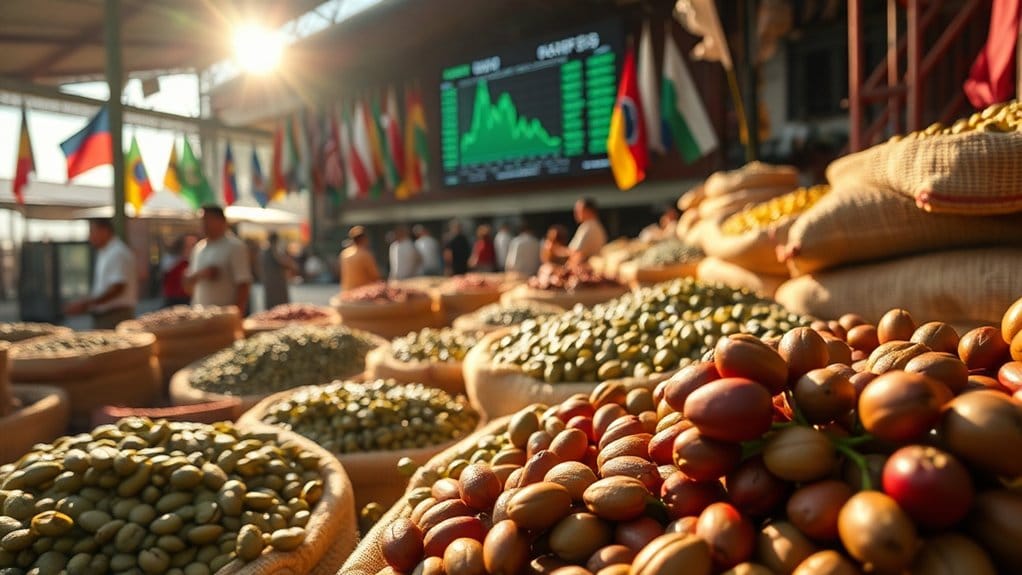
Though global coffee lovers keep reaching for their mugs, geopolitical and economic factors play a massive role in shaping coffee prices.
Think about it: tariff threats and trade wars can scramble supply chains and spike prices. For instance, when specific tariffs hit Colombian coffee, retail prices shot up 20-25%.
But it’s not just about prices; strained relationships between countries can delay shipments and complicate sourcing decisions.
Fluctuating currencies as well add another layer of unpredictability. If a country’s currency weakens, you might find those coffee beans costing a pretty penny.
As you sip your morning brew, remember, it’s not just the coffee farmers facing challenges; it’s a game of global chess affecting what’s in your cup!
Harvest cycles and inventory levels have a big impact on the green coffee market.
Think about it: coffee trees take about eight months to produce cherries, depending on where they grow. Countries like Colombia peak from October to February, creating a busy buzz in the market.
When there’s a bountiful harvest, prices might dip, but low inventory can send prices soaring. Ever been thirsty for your favorite brew? That sudden demand can catch roasters off guard, raising prices fast!
Weather and climate likewise play tricks, sometimes ruinous, causing unpredictable yields. Farmers must navigate these challenges, leading to feast or famine cycles.
Climate change affects coffee bean quality by altering temperatures and rainfall patterns. You’ll experience reduced yields, increased pests, and inconsistent ripening, all of which diminish flavor profiles and overall quality in your coffee production.
Coffee certifications improve pricing by ensuring stable incomes through minimum price floors, attracting higher premiums for organic and specialty coffee. They likewise boost consumer willingness to pay, benefiting farmers as well as promoting sustainable practices within the industry.
Trade agreements greatly influence coffee pricing by establishing tariff exemptions and varying rates based on origin. These tariffs can increase costs for importers, affecting supply chains and eventually leading to fluctuating prices you pay at the market.
Yes, coffee prices often spike in colder months when demand peaks. Seasonal factors, like harvest yields and global consumption trends, drive these fluctuations, affecting your costs if you’re looking to buy or sell coffee.
Consumer trends greatly shape the coffee varieties you find. As you seek unique flavors, lower acidity, and sustainable options, suppliers adapt by offering diverse, innovative selections that cater to your evolving tastes and health-conscious preferences.