Physical Address
304 North Cardinal St.
Dorchester Center, MA 02124
Physical Address
304 North Cardinal St.
Dorchester Center, MA 02124


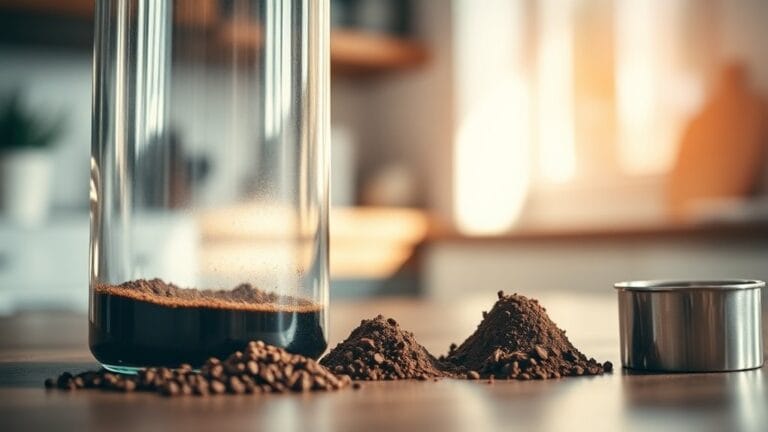
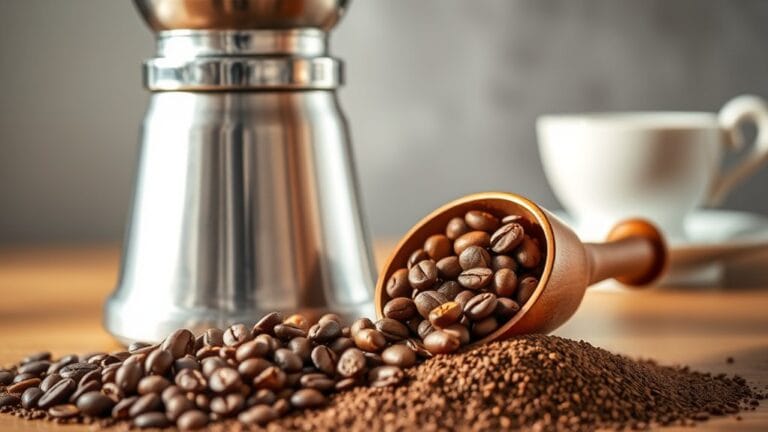
To brew great pour-over coffee, aim for a medium-fine grind. It balances extraction and flavor perfectly, giving you that sweet, clear taste. Cone-shaped drippers like the Hario V60 love this grind. Too coarse? Your coffee might taste weak. Too fine? You risk bitterness. Grinding right before brewing keeps it fresh—like a warm hug in a mug! Curious about finer details? Stick around to investigate how your brewing method can further enhance that cup.
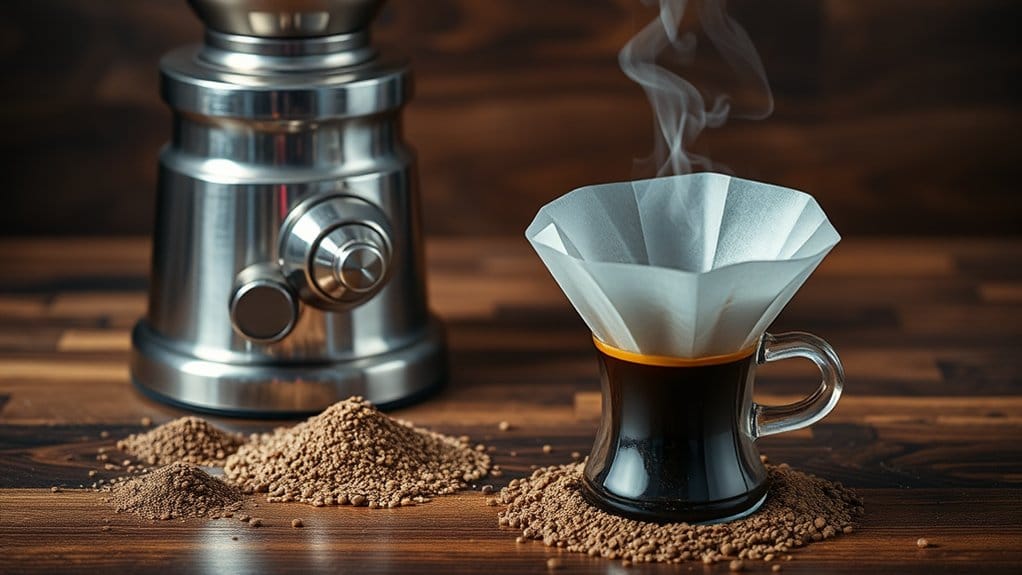
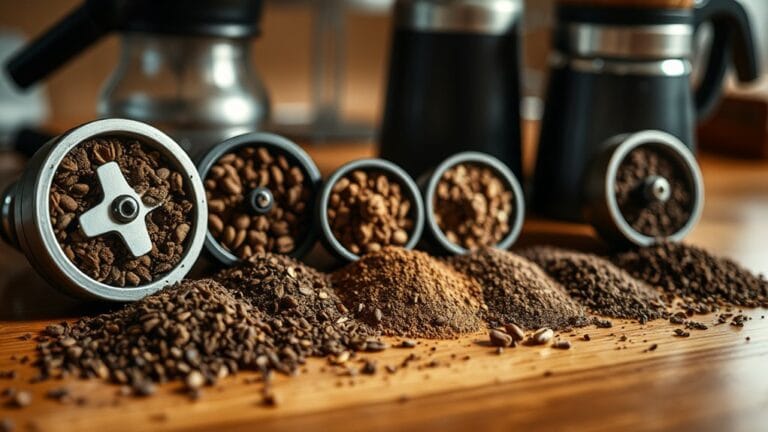
When you think about making a perfect cup of pourover coffee, you mightn’t realize how crucial grind consistency is for flavor. Imagine sipping coffee that tastes muddled or bitter—yuck! That’s often because of uneven grind sizes. Uniform grinds allow water to extract flavors evenly, letting the coffee shine. If you’ve got fines mixed in, those tiny bits can lead to over-extraction, creating bitterness that masks delicious notes. On the flip side, larger boulders can make your cup taste watered down. When each particle is similar in size, you get clarity and sweetness in every sip. Grind size consistency is essential for achieving this uniformity, so investing in a good grinder isn’t just for coffee snobs—it’s your ticket to brewing bliss! Who doesn’t want that? Additionally, using a quality burr grinder can significantly enhance the consistency of your grind. Understanding the relationship between grind size and extraction will help you appreciate how these elements work together to enhance your coffee experience.
Getting the grind size right can make all the difference in your pourover coffee experience. For cone-shaped drippers like the Hario V60, stick to a medium-coarse grind. This size helps balance extraction, giving you a delicious cup without any bitterness. Freshly ground coffee maximizes flavor extraction, making it essential to grind just before brewing. Furthermore, different brewing methods may require specific adjustments to achieve the desired taste profile. Burr grinders are particularly effective for achieving the consistency needed for a perfect grind.
If you’re using a standard pour-over method, aim for a medium grind between 410 to 930 microns. It works well for drip coffee and tweaks your brew’s strength perfectly! The recommended water-to-coffee ratio of about 1:18 can also influence the overall taste. For faster brews, consider a medium-fine grind, which increases extraction efficiency. Don’t forget about immersion brewers; they thrive on a coarser grind.

Understanding how grind size affects extraction time can transform your coffee brewing routine into a delightful experience.
When you use coarser grinds, the coffee requires more time to brew, since fewer surface areas are exposed to water. On the flip side, finer grinds can speed things up, but watch out—if you brew too long, your cup might turn bitter. Controlled agitation measurement is key for achieving the perfect balance in extraction based on grind size. Picture coarse rocks let water flow freely versus sand slowing it down. The trick is to match your grind size with your brew method. In pour-over brewing, precision pouring techniques significantly enhance flavor extraction.
For pour-over coffee, medium-fine grinds usually hit the sweet spot. Happy brewing, and remember, your coffee’s flavor adventure starts with the right grind!
Grind size isn’t the only factor that can make or break your pour-over coffee experience.
Choosing a burr grinder is key for consistent grinds that unlock amazing flavors. Conical burrs, quieter and cooler, are perfect for home use, whereas flat burrs offer precise control for your brewing finesse.
Don’t skip cleaning! Regularly remove old coffee oils or grounds with brushes or vacuums.
Measure your coffee by weight, not volume, for accuracy—aim for 15-20 grams per 300 ml of water. Remember, freshness matters! Grind just what you need right before brewing to keep those flavors lively. Adjusting your coffee-to-water ratio based on taste preference is also crucial for a well-balanced brew.
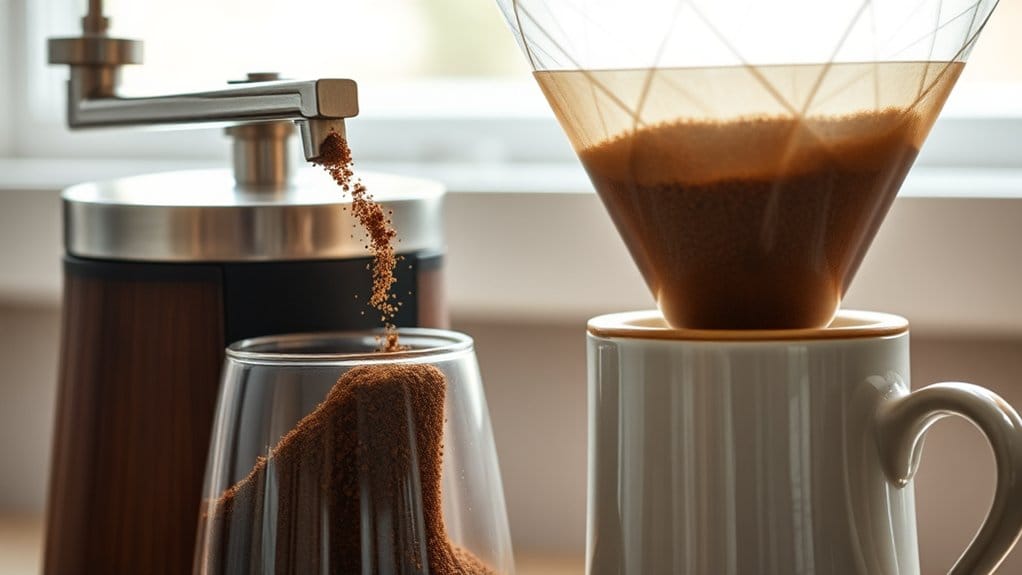
When you’ve got your brewing equipment ready, it’s time to think about your grind size.
Each pour over device has its quirks. For instance, a V60 loves medium-fine grind, which helps it flow perfectly. Conversely, a Chemex needs a coarser medium, thanks to its thick filters that slow things down. If you’re using a Kalita Wave, stick to a medium grind for that even extraction magic.
Remember, if your brew time shortens, you might want to grind finer to ensure you don’t miss out on flavor. Ethiopian coffee’s unique flavor profiles can be enhanced by the right brewing techniques, ensuring you fully enjoy your cup.
Don’t be afraid to experiment a little; your coffee should taste as amazing as your brewing gear looks! Happy brewing, coffee lover!
Yes, grind size does affect caffeine content in coffee. Finer grinds increase extraction, leading to more caffeine, as coarser grinds offer less caffeine because of faster extraction rates. Experimenting helps you find your perfect balance.
Humidity influences grind size and extraction by making beans denser and stickier. You’ll need to use a coarser grind to prevent over-extraction and guarantee consistent flavor. Adjust your settings based on humidity for best results.
When grinding coffee for pour over, you might make mistakes like using an inconsistent grind, relying on the wrong size, or not adjusting for your equipment. Each misstep can affect your brew’s flavor and strength.
Absolutely, grind size can vary based on coffee bean type. For instance, brighter African beans might need a coarser grind, whereas nuttier Latin American ones benefit from a finer grind. Adjust accordingly for best flavor.
You should recalibrate your grinder at least once a month to maintain consistency. If you grind daily or switch beans, do it weekly. Adjust immediately after any changes to guarantee ideal grind size for brewing.