Physical Address
304 North Cardinal St.
Dorchester Center, MA 02124
Physical Address
304 North Cardinal St.
Dorchester Center, MA 02124

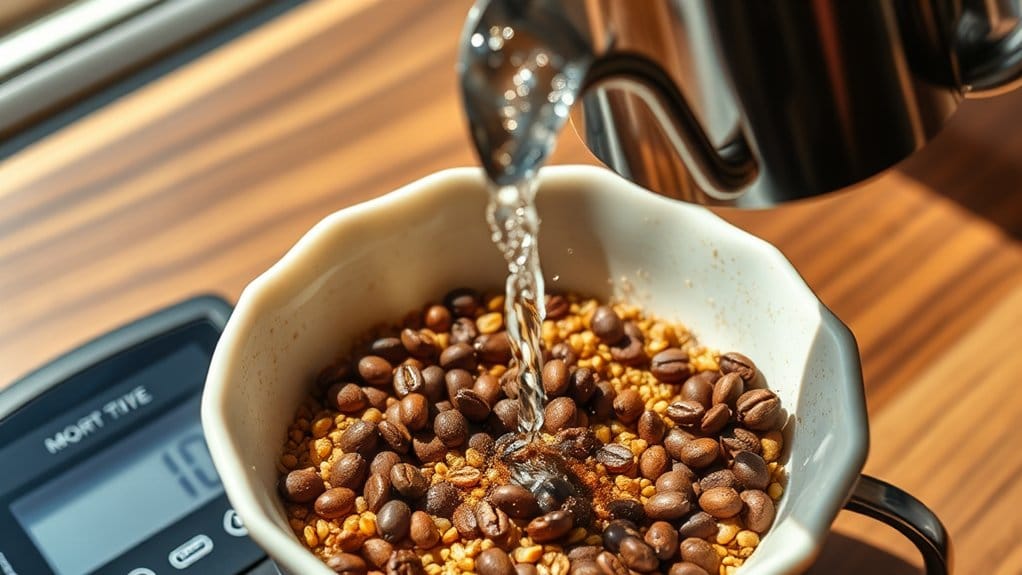
Regarding pour-over brew time, several factors play an important role. You’ll want to evaluate water temperature, grind size, and coffee-to-water ratio for the best results. The filter type can affect flow rate, whereas your pouring technique influences extraction. For example, pouring too quickly might leave you with weak flavors, while a slow, steady stream can work wonders. Curious to learn how each of these elements really impacts your brew? There’s plenty more to investigate!
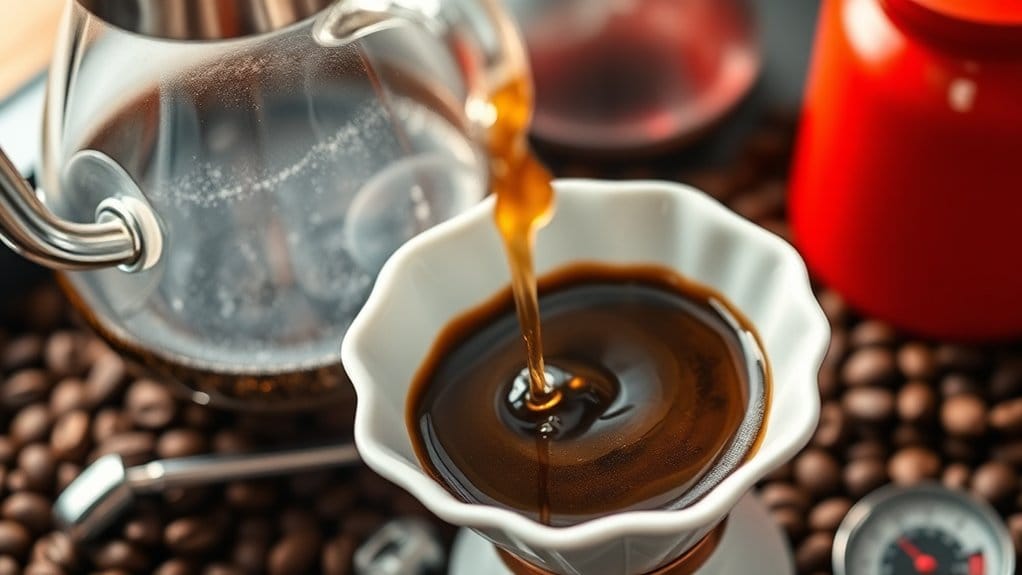
When you’re brewing coffee, the temperature of the water plays a starring role in how your cup will taste. Perfecting your brew requires you to aim for a sweet spot between 90°C and 96°C (195°F and 205°F). Too hot? You risk that dreaded bitter flavor that’ll send your taste buds running. Too cold? You’ll end up with a weak, sad cup that barely whispers coffee. Different flavors come alive at different temperatures, leading to a delightful balance between acidity and bitterness. To nail it, use a thermometer or let boiling water cool for about two minutes. Achieving the right temperature is essential for a well-rounded cup of coffee, ensuring that all desirable flavors are extracted without bitterness. Quality of water significantly impacts the final flavor of your brew, so always opt for filtered water. Think of it as giving your coffee a spa day, ensuring it shines bright in flavor. Additionally, maintaining grind size consistency is crucial for optimal extraction during the brewing process. What could be better than that?
Perfecting your pour over isn’t just about the water temperature; grind size plays a key role too. Think of it like this: finer grinds create more surface area, speeding up extraction and delivering rich flavors quickly. But watch out! If the grind’s too fine, your coffee might turn bitter. Additionally, the correct grind size is essential for achieving optimal flavor extraction that aligns with your brewing method. Fine grinds are ideal for espresso, emphasizing their importance in achieving quick extraction.
Conversely, coarser grinds let water flow freely, slowing down extraction and needing longer brew times. You see, it’s like a coffee performance—your grind size leads the way! Adjusting your grind helps achieve that perfect balance of sweetness and acidity. Moreover, the right grind size can significantly enhance the overall coffee experience and improve the flavor depth in your cup. Consistency in grind size ensures even extraction and flavor enhancement, comparable to using even flour in baking.
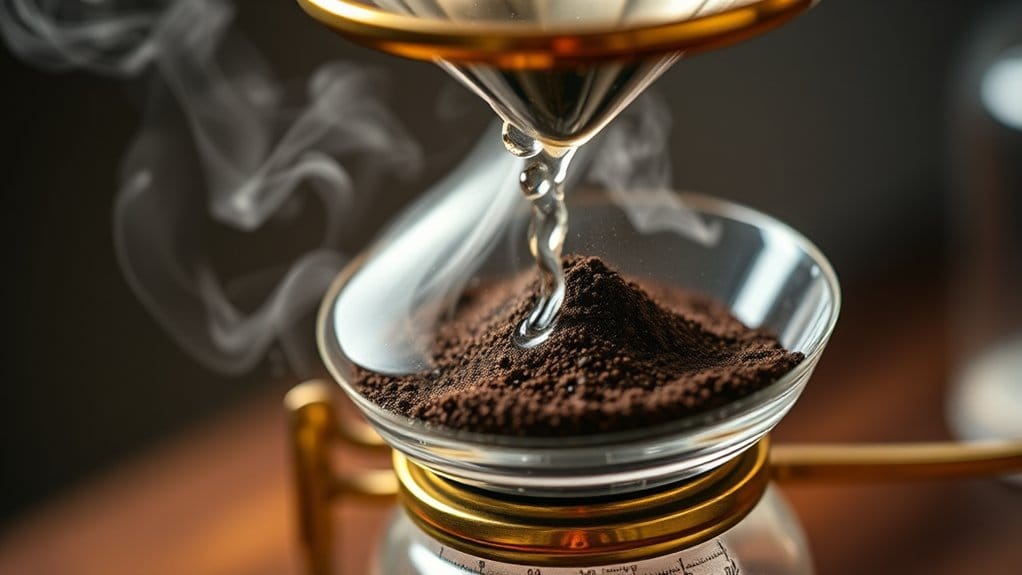
Getting the coffee-to-water ratio right can feel like a bit of an art form, don’t you think? A good starting point is the National Coffee Association’s “Golden Ratio”: that’s about 9–11 grams of coffee for every 6 ounces of water, hitting around 1:17.
Of course, you can tweak this! If you like your coffee stronger, go for a lower ratio. Prefer a lighter brew? Increase the water a bit. Remember, a precise scale helps you nail those measurements.
Using 1 gram of coffee for every 16-17 ml of water is a handy guideline. Each little change in your ratio affects the coffee-to-water ratio, flavor, strength, and even the brew time, so keep experimenting until you find your perfect cup!
Choosing the right filter can make a world of difference in your coffee brewing experience.
You mightn’t realize it, but the shape and material of your filter really impact how quickly the water flows through your coffee grounds. For instance, cone-shaped filters create a slower flow, thanks to that deeper coffee bed.
Meanwhile, flat-bottom filters deliver a consistent stream. Thicker filters can be like traffic jams for water! And check this out—cloth filters with their larger holes let water zoom right through.
Plus, each manufacturer has quirky designs, affecting your brew. So, immerse yourself in your filter choices, and experiment! You might just find your perfect cup waiting for you, with flavors dancing in splendid harmony.
Happy brewing!
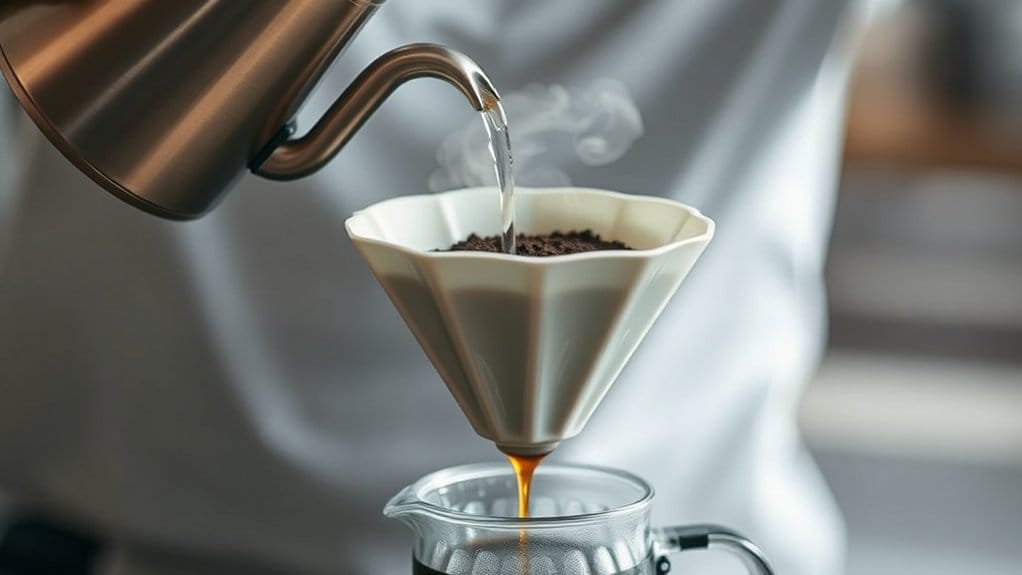
When you immerse yourself in the art of pour-over coffee, you’ll quickly notice that your pouring technique can make or break the brew. Imagine a steady stream of hot water cascading over your coffee grounds, promoting even extraction.
Pouring every 15-30 seconds helps control brew time effectively. Try a few short bursts for a flavor twist or one long pour for a smooth finish. But don’t rush! Quick pours can lead to under-extraction, ruining your morning magic.
Keep the water level steady, too; it’s like giving your coffee a warm embrace. Remember, the device you’re using likewise shapes your pouring style.
Adopt the rhythm, play with techniques, and watch your coffee evolve into a delightful experience!
Pour-over coffee isn’t just about your pouring technique; it’s furthermore about the beans you choose. Freshly roasted beans, bursting with carbon dioxide, will create a vigorous bloom. This is essential for proper extraction.
Older beans, conversely, release less gas, leading to shorter bloom times. You’ll want to adjust based on roast levels too—lighter roasts are denser and slow down brew time whereas darker roasts allow for quicker extraction.
Don’t forget about bean size and uniformity, as mixed sizes can lead to uneven brewing. Think of your beans as the heart of your coffee creation, steering you toward the perfect brew. Additionally, choosing single-origin coffee can enhance the flavor complexity and overall health benefits of your brew.
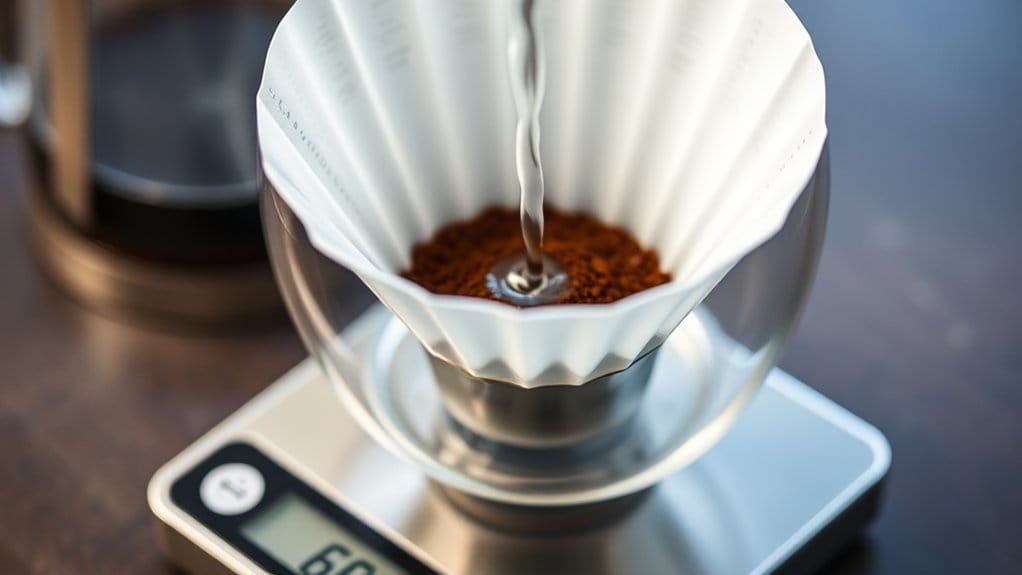
Understanding the role of precision in your brewing equipment can make all the difference in your coffee experience. Imagine crafting the perfect cup by controlling every detail. A well-designed pour-over dripper can change everything, making your coffee smoother and more delicious. With a gooseneck kettle, you’ll have the power to control your water flow, preventing over-extraction and bitter flavors. Don’t underestimate filters! Their shape and material affect everything, including brew time. The right grind size matters too; finer grounds slow the water down, enhancing flavor. Capture adjustable parameters—tweaking bloom time or flow rates will make your coffee stand out! Investing in precision guarantees each cup meets your personal taste. After all, isn’t that what coffee lovers dream of? Moreover, controlling water temperature is crucial for optimal flavor extraction without burning the coffee.
Humidity affects pour-over brew time by altering water flow and extraction rates. In high humidity, slower water infiltration leads to longer extraction. Adjusting grind size and pouring speed helps you maintain consistency and avoid under-extraction.
Brew time greatly impacts caffeine extraction. The longer you let water interact with coffee grounds, the more caffeine dissolves. Nevertheless, over-brewing risks bitter flavors, so you’ll want to find that perfect balance for ideal taste.
Yes, different water types can influence brew time. Using filtered water with balanced minerals guarantees consistent extraction. Conversely, very soft or hard water might either slow down or complicate the brewing process considerably.
Altitude affects brewing processes by lowering water’s boiling point, which slows extraction. You’ll need to adjust brew times, grind finer, and closely monitor temperatures to improve flavor clarity and avoid weak, underdeveloped coffee.
Yes, brewing time changes for iced pour-over methods. You’ll need longer brews because of lower temperatures slowing extraction, so adjusting grind size and dose helps maintain flavor balance as you achieve the desired brew strength.