Physical Address
304 North Cardinal St.
Dorchester Center, MA 02124
Physical Address
304 North Cardinal St.
Dorchester Center, MA 02124

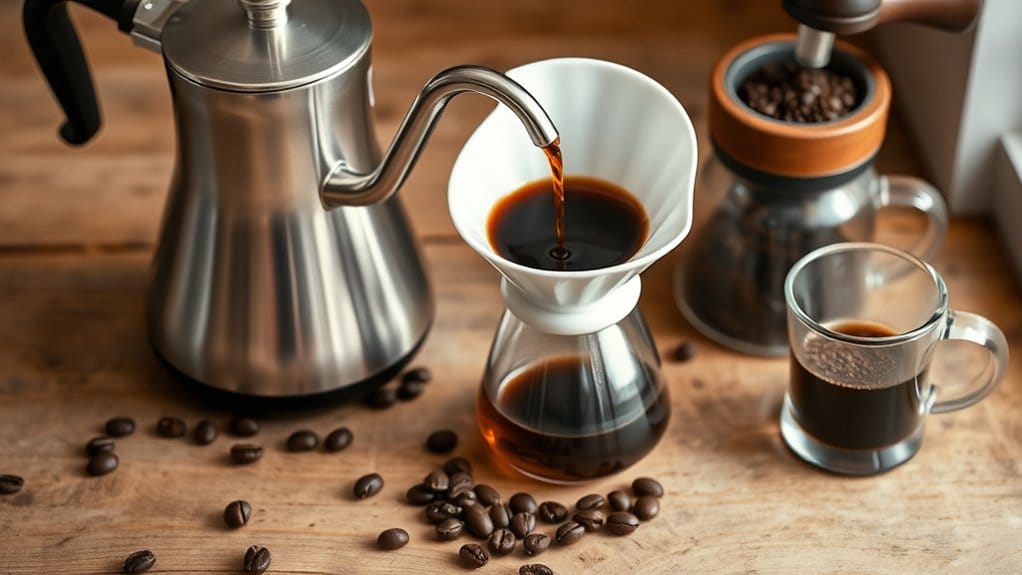
To brew a fantastic cup of coffee manually, you need quality beans, like Arabica or Robusta, and a dependable grinder to guarantee perfect grind size. Don’t forget a gooseneck kettle for precise pouring, plus a French press or pour-over device for rich flavors. Water quality is key, too—use filtered and chlorine-free. With the right tools and ratios, you’ll create a delightful brew. Stick around, and you’ll uncover some handy tips on storage and affordable solutions!
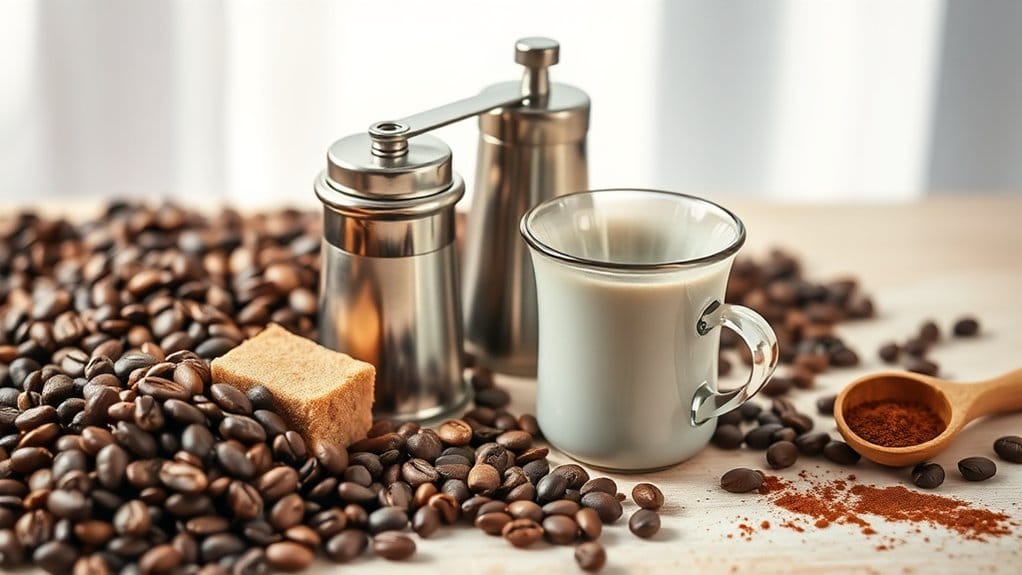
When you think of brewing coffee, the choice of beans can feel like a treasure hunt. You’ll find two main types to reflect on: Arabica and Robusta.
Arabica beans are your smooth-talking friends, bringing floral and fruity notes. In the meantime, Robusta beans show up boldly, offering a bitter punch with higher caffeine. The choice between single-origin and blended coffees further enhances your options to explore unique flavor profiles. Additionally, many coffee enthusiasts prefer single-origin subscriptions to experience a variety of flavors from different regions, which are often driven by distinct geographic origins.
Now, pick a region! Ethiopian beans sparkle with bright flavors, whereas Colombian beans sweeten the deal with nutty undertones. If you want something earthy, Vietnam’s Robusta won’t disappoint.
Investigate roast levels, too! Light roasts keep the origin’s character, whereas dark roasts give you a rich, smoky vibe.
Aren’t you excited to uncover your perfect flavor? Immerse yourself, and let your brewing adventure begin!
Brewing coffee at home is like starting on a delicious adventure, and the right equipment makes all the difference!
You’ve got to examine a few key pieces to enhance your experience. First up is the filter device—try a V60 cone filter cup for easy brewing, or mix it up with a flat-bottom filter to investigate new flavors. A variety of coffee beans are available, so exploring local roasters for fresher options can elevate your brew to new heights. Using freshly roasted coffee is essential as it enhances flavor and quality, ensuring a better coffee experience. Consider utilizing an espresso machine method for a strong and flavorful extraction if you want to truly replicate café-style coffee at home.
Glass coffee servers are great for collecting your brew, whereas a gooseneck kettle helps you pour precisely. Don’t forget a digital coffee scale to measure your coffee and water; it guarantees you get the same great cup every time.
With the right tools, you’ll enjoy every sip of your handcrafted coffee, and trust me, your taste buds will thank you!
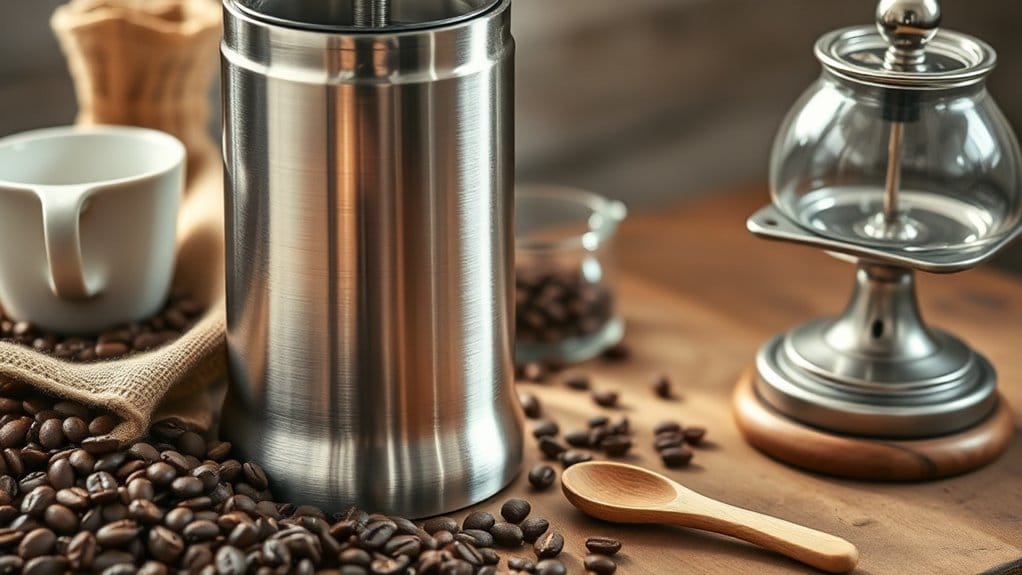
Choosing the right grinder can transform your coffee routine from ordinary to extraordinary.
You’ll want a manual grinder that uses muscle power, turning a crank to crush beans between burrs. These grinders are perfect for camping trips or power outages, which means you can brew coffee anywhere. Proper grind size is essential as it directly affects extraction balance and flavor complexity, allowing you to enjoy the full spectrum of flavors in your coffee.
They take a little more time—and a bit of elbow grease—but the flavor you’ll get is worth it. With a manual grinder, you’ll enjoy a ritualic experience, allowing you to fine-tune the grind size for various brewing methods. This customization is important because different brewing methods require specific grind sizes, ensuring the best flavor extraction.
Some models are built from durable materials like stainless steel, so they can last a long time. Plus, they’re light and compact, making them the ideal travel companions.
Happy grinding!
Understanding grind size and consistency is key to your manual coffee brewing experience. The right grind can make or break your cup!
Coarse grinds, about the size of sea salt, work best for methods like French press, where steeping is a long game. Medium grinds, like granulated sugar, shine in drip and pour-over brewing; they balance flavor beautifully.
Need a little espresso magic? Go for a fine grind resembling table salt—too fine could turn your drink bitter, yikes! For that Turkish delight, extra fine grinds are crucial, offering intense flavor drama. Adjusting your grind size can significantly impact optimal extraction of flavors from your coffee.
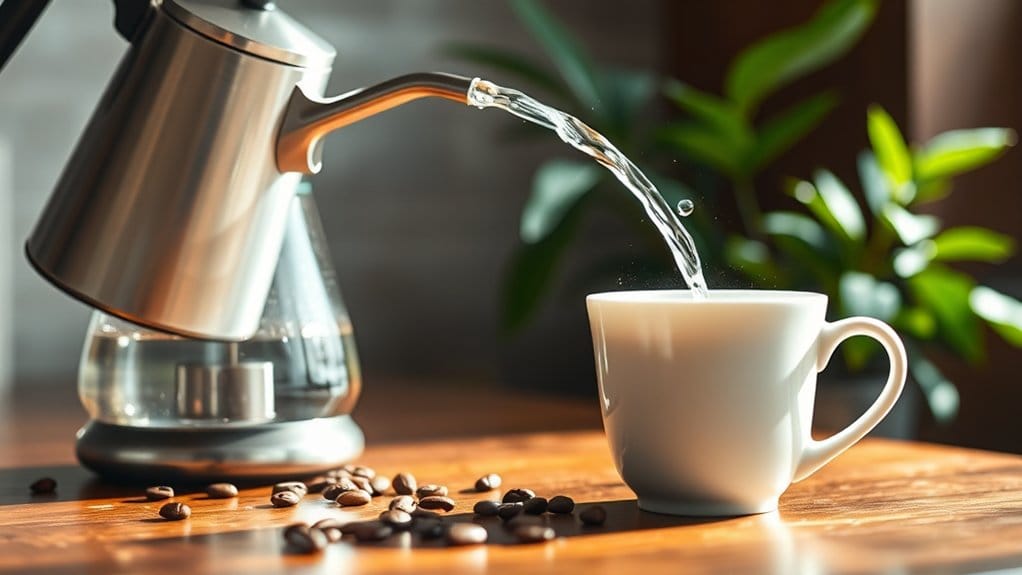
Water’s the unsung hero of your coffee brewing expedition, yet it often gets overlooked!
Reflect on it—your coffee’s mostly water. To brew the best cup, you need water with moderate hardness, between 50-175 ppm. Aim for a slightly alkaline pH of 6.5 to 7.5 to keep flavors balanced. Nobody wants a flat cup of coffee, right?
Use chlorine-free water to avoid those unpleasant chemical notes.
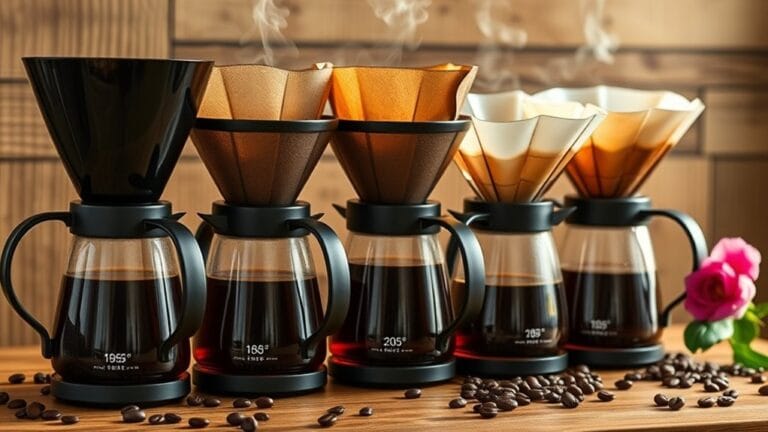
And remember, the temperature matters! Heat your water between 195-205°F for peak extraction. Minerals like calcium and magnesium improve flavor and sweetness, making each sip magical. The ideal water temperature is crucial for optimal flavor extraction, ensuring your coffee reaches its full potential.
After considering how water can improve your coffee experience, it’s time to explore the fun world of manual brewing methods.
From pour-overs to the classic French press, there’s something for everyone. Imagine the precision of a V60, where you control every pour for a clean, bright cup. Or picture steeping in a French press—where strong flavors burst forth with each sip.
Love travel? The AeroPress brews quickly, packing a tasty punch in under two minutes!
Don’t forget the Clever Dripper, blending immersion with filtration for a balanced taste. Each method offers unique flavors and experiences, and understanding proper grind sizes can enhance your brewing results. So, which one will you try first? Your taste buds are in for an adventure!
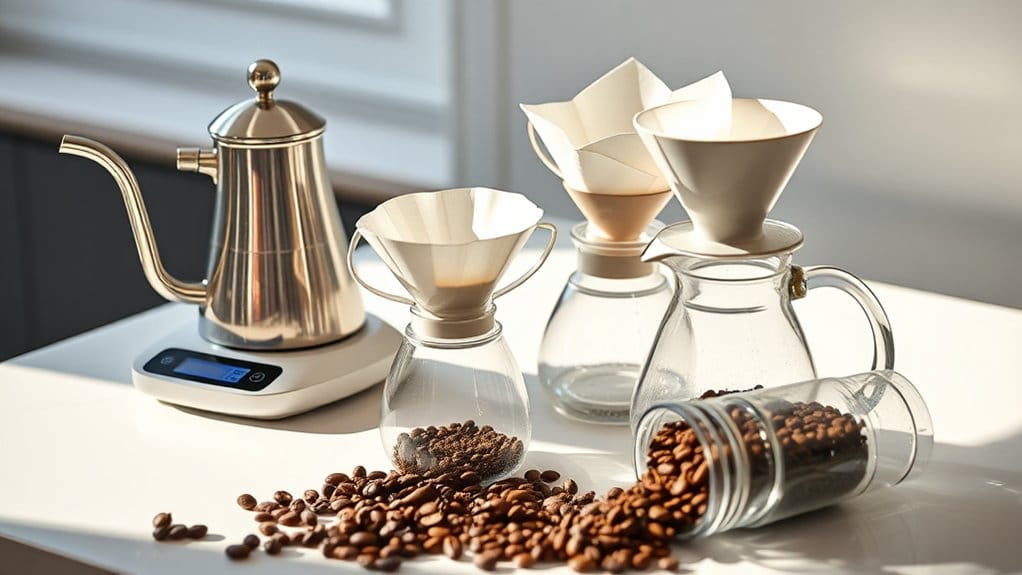
In the matter of brewing the perfect cup of coffee, having the right tools can make all the difference. Start with a burr grinder; its uniform grind size helps extract flavors beautifully. If you want precision, adjustable settings are a must!
Certainly, blade grinders are cheaper, but they’ll leave you with sad, uneven grounds.
An electronic scale is your best friend. It takes the guesswork out of measuring coffee and water, ensuring a consistently great brew.
Don’t forget a gooseneck kettle, which lets you control your pour like a coffee ninja! Using a medium-coarse grind size also plays a crucial role in achieving optimal flavor extraction.
And regarding filtering, choose your paper wisely; it affects flavor clarity.
With these tools in hand, you’re on your way to coffee greatness!
Getting the right coffee-to-water ratio is like finding the magic key to your perfect brew.
You might start with the golden ratio of 1:18, which gives you a balanced cup. If you prefer stronger coffee, drop to 1:14; for something lighter, try 1:20.
Different brewing methods bring their own styles. For instance, a French press thrives with 1:12 to 1:15, whereas espresso is like an artist, delighting in a concentrated 1:2.
Don’t fret about being exact right away. Start at 1:17, experiment, and adjust to your taste. Additionally, using a quality coffee maker such as AeroPress Original can enhance the brewing process significantly.
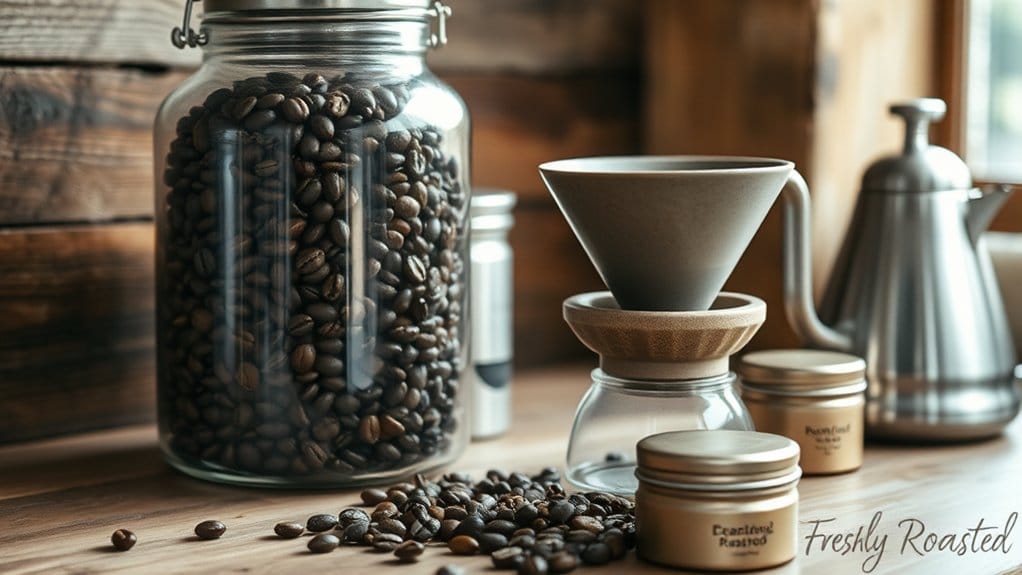
Storing coffee beans properly can feel like a little art form, and it’s one that greatly impacts your daily brew.
First, grab an airtight container—a mason jar or stainless steel canister works like a charm. Opaque or tinted choices block light, preserving those rich flavors.
Keep your beans in a cool, dark, dry place, like a pantry, away from windows and heat sources. Buying smaller batches keeps your coffee fresher longer, too.
If you’re feeling adventurous, freeze them in smaller portions—just remember, no repeated freezing! Think of it as a cozy nap for your beans. Freezing coffee beans can extend shelf life and maintain freshness for months when stored properly.
Ultimately, grind them just before brewing to release their full potential. Cheers to your perfect coffee day!
Preserving your coffee beans sets the stage for a great brew, but once you’re ready to enjoy that fresh cup, finding an affordable brewing method makes all the difference.
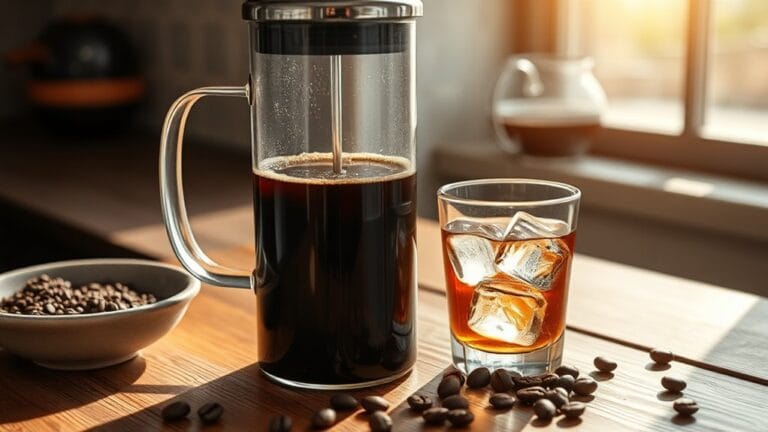
For beginners, the French Press is a star. It’s simple, inexpensive, and brews a rich, full-bodied coffee. Or, consider the pour-over devices like the V60 or Bee House, which shine with their clean flavors and easy setups.
Most manual brewers range from $8 to $71, so you can find something that fits your budget. Don’t forget important items like a grinder and a kettle! Additionally, maintaining a consistent grind size will help you avoid over or under-extraction for a better coffee experience.
Enjoying great coffee doesn’t have to break the bank. With these tools, you’ll soon be brewing like a pro—sip, smile, and savor!
Coffee origin greatly influences flavor profiles. When you examine beans from Africa, Latin America, or Asia, you’ll notice varying notes ranging from fruity and floral to earthy and spicy, depending on regional characteristics and growing conditions.
Yes, you can reuse coffee filters, typically up to three or four times, but make certain they’re completely dried and free of grounds. Watch for bitterness or sediment—these are signs to discard the filter.
For cold brew, a 1:8 ratio often balances flavor well. If you prefer a stronger concentrate, try 1:4. Adjust based on your taste, and experiment to find what suits you best!
You can tell your coffee beans are stale if they smell flat or sour, taste bitter, feel dry and dusty, and lack visual vibrancy. Check for oils on the surface and perform a bloom test for freshness.
Using a French press enriches your coffee experience by delivering rich flavors, higher oil content, and various brewing strengths. It’s eco-friendly, easy to use, and supports community engagement as it promotes the appreciation of coffee culture.